

Joy Is Pink
(Liturgically speaking, of course)

Yesterday was the third Sunday of Advent, which means that churches around the world spent their Sunday mornings lighting the “Joy” candle of their wreath, the lone pink symbol among pillars of purple.
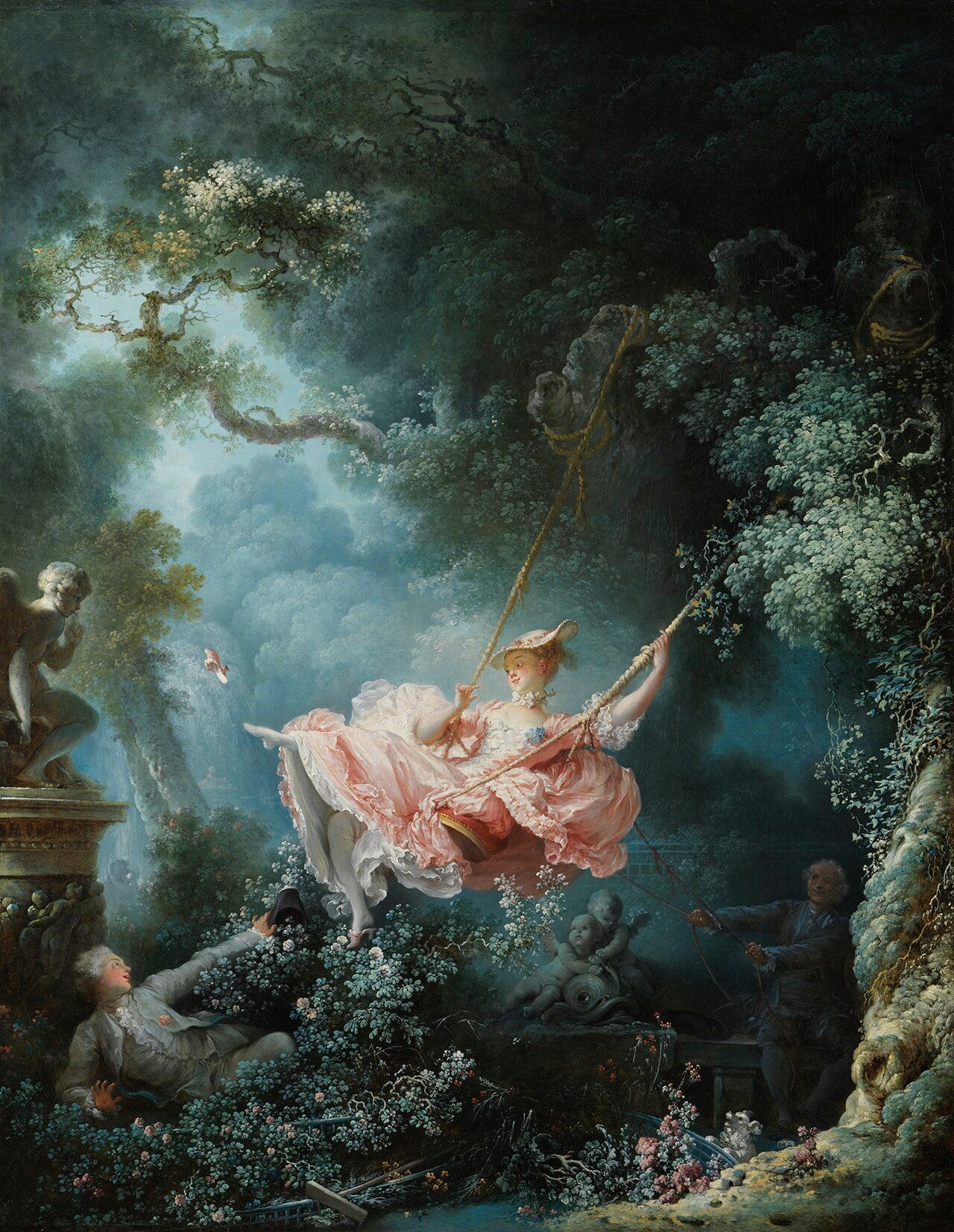
Considered the halfway point, pink is intended to denote a shift in the season — from the solemnity of waiting to a more hopeful expectation.
I’ve always been drawn to the unique, the different, the quirky. The pink candle at Advent is no exception. It stands out for its rosy hue. In a world of purple and gold and white, colors that feel royal and formal, the pink candle looks almost out of place for its pastel cheer.
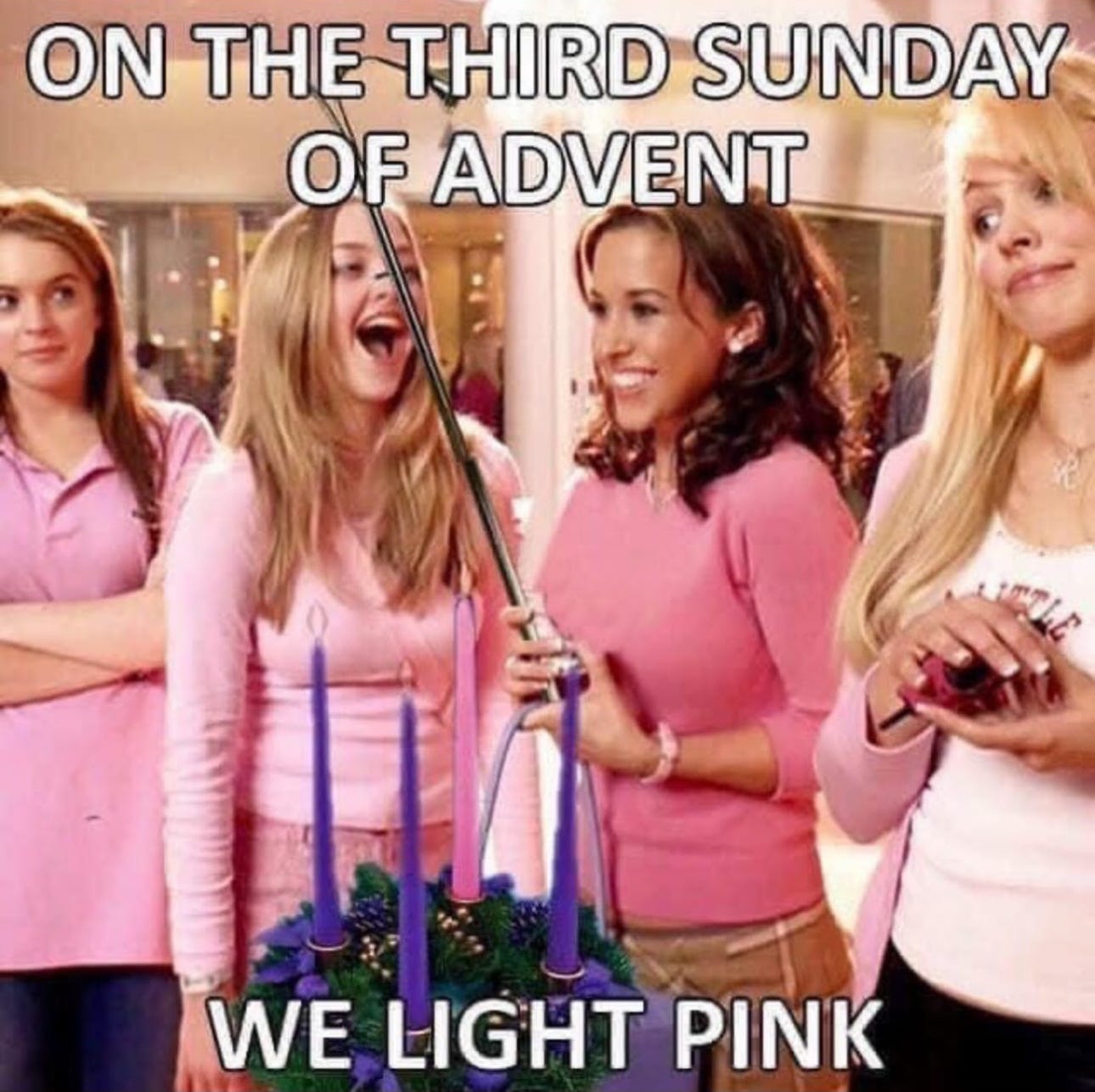
In Mean Girls, it’s a well-known fact that “On Wednesdays, we wear pink!”
In the case of the Plastics, pink is a means of exclusion, illustrating the in-group’s superiority by virtue of their matching pink ensembles. In Advent, however, pink takes on something entirely different. Pink becomes a symbol of defiance, a bold decision to experience joy in the midst of darkness.
And honestly, we live in a world that often feels dark. In the past week alone, we’ve heard stories of students sheltering during yet another school shooting at Brown University. Two people were killed, and nine more were wounded. We’ve born witness to the hate that so many experience and the accompanying violence as we mourn, alongside the Jewish community, the shooting that occurred at Bondi Beach, Australia, during a Hannukah festival. Fifteen thus far have died from the attack.
It’s no wonder that the world feels dark. It’s no wonder that joy is an act of resistance in and of itself, a defiant proclamation of the hope we choose to embrace despite it all.
In many ways, how could we not feel joy this time of year? I may be biased though, because I’ve always loved Christmas. I love decorating, I love getting people presents, I love Christmas cookies and hot cocoa, I love watching Christmas movies and going and seeing Christmas lights… I kind of love the whole Christmas thing.
And while I’m not someone who plays Christmas music year round (more power to you if you are), I still quite enjoy it. I don’t dread Mariah Carey thawing out after Thanksgiving. “All I Want for Christmas” is an anthem, for crying out loud.
Christmas music tends to be joy-filled. “Joy to the World” rings out as we “Deck the Halls,” saying “We Wish You a Merry Christmas” to all we encounter throughout the month. “The 12 Days of Christmas” count us down as we look ahead to that “Little Town of Bethlehem,” where undoubtedly, “Hark! The Herald Angels Sing.”
Now, there are a few mournful tunes in the mix. But in many ways, we do a better job of celebrating the joy than we do honoring the waiting.
I’ve been known to say that Christmas makes the world feel softer. And Christmas carols filling the air are a part of that softness. They tell of a human kindness that rarely is so universally felt. The lyrics profess an unabashed cheerfulness that might be branded as annoying some other time of year.
And yet Advent is about waiting, whether we honor its gravity or not.
Can we be so cheerful while we wait?
“O Come, O Come Emmanuel” has long been one of my favorite Christmas songs. It is one of the few aforementioned mournful holiday tunes. The first verse describes us as mourning in exile, which I think is an honest depiction of the world as we wait. The much lesser known third verse is perhaps my favorite though:
O come, Thou Dayspring, from on high,
And cheer us by Thy drawing nigh;
Disperse the gloomy clouds of night,
And death’s dark shadows put to flight.
Rejoice! Rejoice! Emmanuel
Shall come to thee, O Israel.
By now, you’re wondering what all of this has to do with pink. Or maybe you forgot that pink is where we started.
The more I’ve thought about Advent, and about joy specifically, the more I’ve realized that the complexity, even the contradiction, is exactly the point.
We live in a dark world, yet candles still flicker.
We embrace joy, because it’s a necessary shift in perspective — from solemn acceptance to delighted anticipation, from reflecting upon what has been to looking toward what is to come.
Joy is our way of grounding ourselves in the present, of recognizing the ways in which the present is an in-between, and though we wait, we also celebrate.
Gloomy clouds of night may gather, but we recognize the reality of their eventual dispersion, of Emmanuel, God with us, putting death’s dark shadows to flight.
Sounds almost like a sunrise, doesn’t it?
Joy is pink because the sun rises each morning and paints the sky with cotton candy clouds. Joy is pink because the sun sets each night, causing the horizon to bloom with rosy petals of color.
Joy is pink because even when the darkness seems to subsume the light, the stars defiantly blaze. Joy is pink because no matter how dark the night becomes, it knows the morning will come.
Advent is a time in which we celebrate both of these transitions, from light to dark, and from dark back to light. And pink is the color of the in-between. Pink is the joy we feel within the transition, the chaos of the present and the fragility of existence, the culmination of all that has come and the potential of all that could still be.
Pink is a warm embrace, a defiant dispersion of the gloomy clouds of night.
May we all think pink, be pink, and live utterly pinkaliciously this week, as we marvel at the sacred and miraculous in-between of our lives, and the joy of being known by the Divine in the midst of it all.
And even if the joy doesn’t feel near today, I assure you, beloveds, the sun will rise tomorrow. Those cotton candy clouds will make their appearance once more.
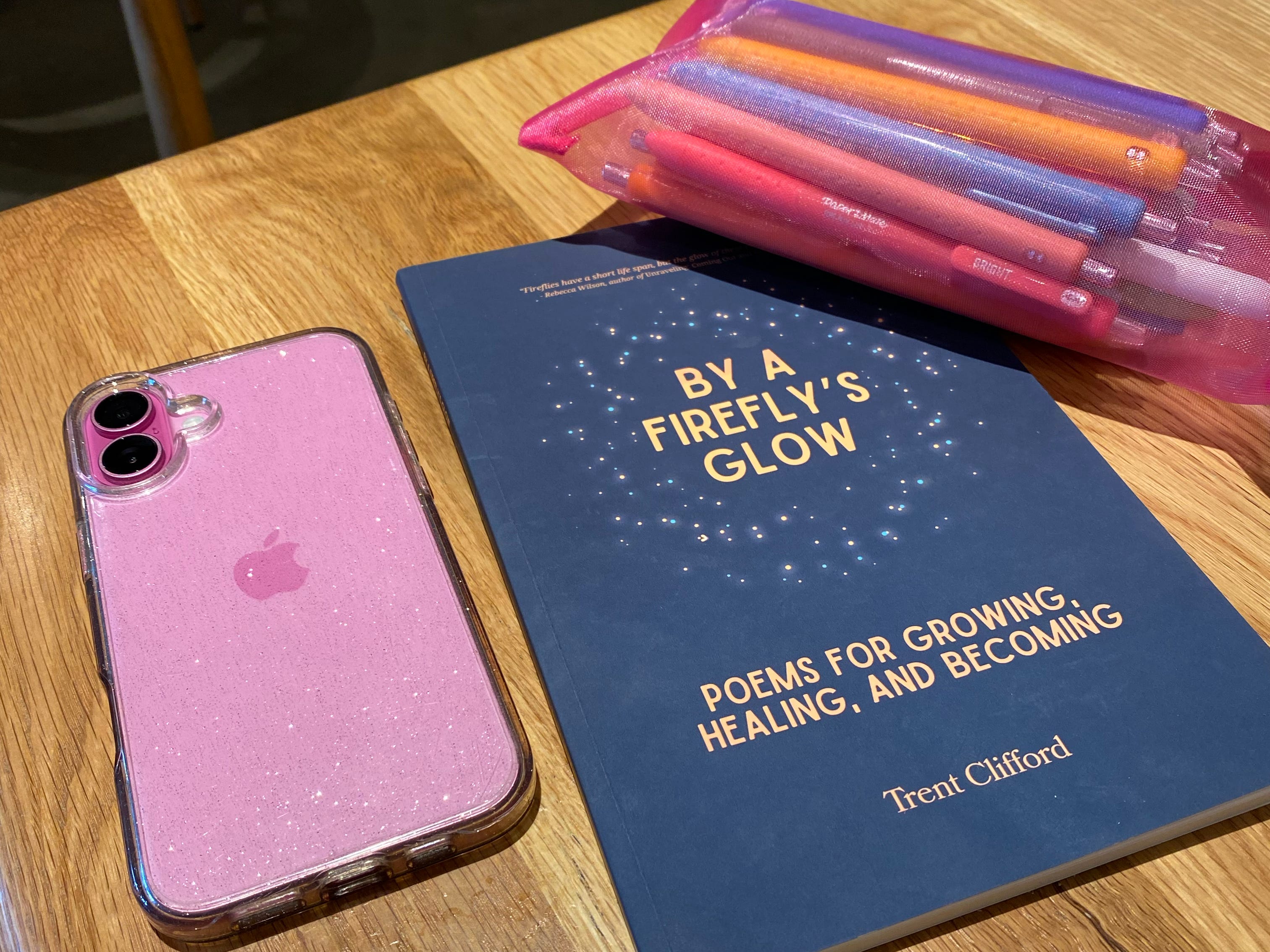
Love the phone case and these words reminding us about the power of pink and joy!